Italy: Arrival and Dolomites
This July, I traveled to Italy with my girlfriend to celebrate the end of general surgery residency—the longest five years of my life! What follows is a brief summary of our trip, along with some of the pictures we took along the way. A trip to the Dolomites turns out to be challenging to plan for a variety of usual and unusual reasons; not only is the area non-English-speaking, but the entire region of South Tyrol is linguistically diverse, with German, Italian, and Ladin (a language native to the region).
Planning our two days of hut-to-hut hiking was the most difficult part of the trip. Most travelers we encountered mentioned they had booked their stays through travel agencies or as part of a pre-planned package, which made us unique among those in the rifugios for having planned our hiking independently. I hope this recap of our itinerary (and some highlights along the way) proves useful to other hikers!
Preparation
Huts fill up quickly! We started our travel planning process approximately 5 months before departure and several huts were already fully booked by this point. I suspect many are booked years in advance, between blocks booked by tour companies and individual hikers. Huts along major hiking thoroughfares (such as the Alta Via 1 and Alta Via 2 trails) fill up especially quickly. On the other hand, we had good luck finding huts that were along lesser-traveled trails, or along side-trails rather than along the major hiking paths. We deliberately booked a path that would have us finish near our starting point, as this allowed us to store our luggage at a local hotel while hiking with only the clothes and supplies we needed while hiking—surprisingly few, given that huts provide food and beds!
Munich and the Brenner Pass
Once we had our hiking booked, we were faced with deciding where to fly into. Both Venice and Munich were attractive options; based on frequency of flights out of Dulles, we chose to fly into Munich and book a train over the Brenner Pass to get to Bolzano.
There is convenient train service from Munich Airport to the city center and Marienplatz, which allowed us to travel (already quite jet-lagged at this point) toward Munich Central Station in preparation for our next train to Bolzano.
We boarded the train towards Bolzano via Innsbruck and the Brenner Pass, although both of us missed portions of the scenery while napping; we had been awake a little over 20 hours at this point.
Bolzano and Ortisei
Our first stay in Bolzano was a short one. We got off the train and made our way to the bus terminal (next door to the train station) for the 350 bus to Ortisei (also known as St. Ulrich in Gröden in German). The bus to Ortisei was a beautiful, although slightly terrifying, journey. We quickly left Bolzano and went through a tunnel before beginning a significant climb alongside a river until we reached Ortisei, at approximately 4,000 feet above sea level.
This bus ride was our first introduction to the mountain roads of South Tyrol, and I wish I had been a little more well-rested for it! The trip is not for the easily-motion-sick, and after about 30 minutes of sharp turns and sudden braking (several areas are too narrow for vehicles to pass side-by-side, and instead drivers must take turns), I was happy to be back on solid ground in Ortisei.
Happily, the town was also far cooler in temperature than Bolzano. The altitude, along with being solidly in the heart of the Dolomites, made for a considerable difference in comfort. After a short afternoon of sightseeing around town, we gave in to our jet lag and called it an early evening.
Ortisei impressions:
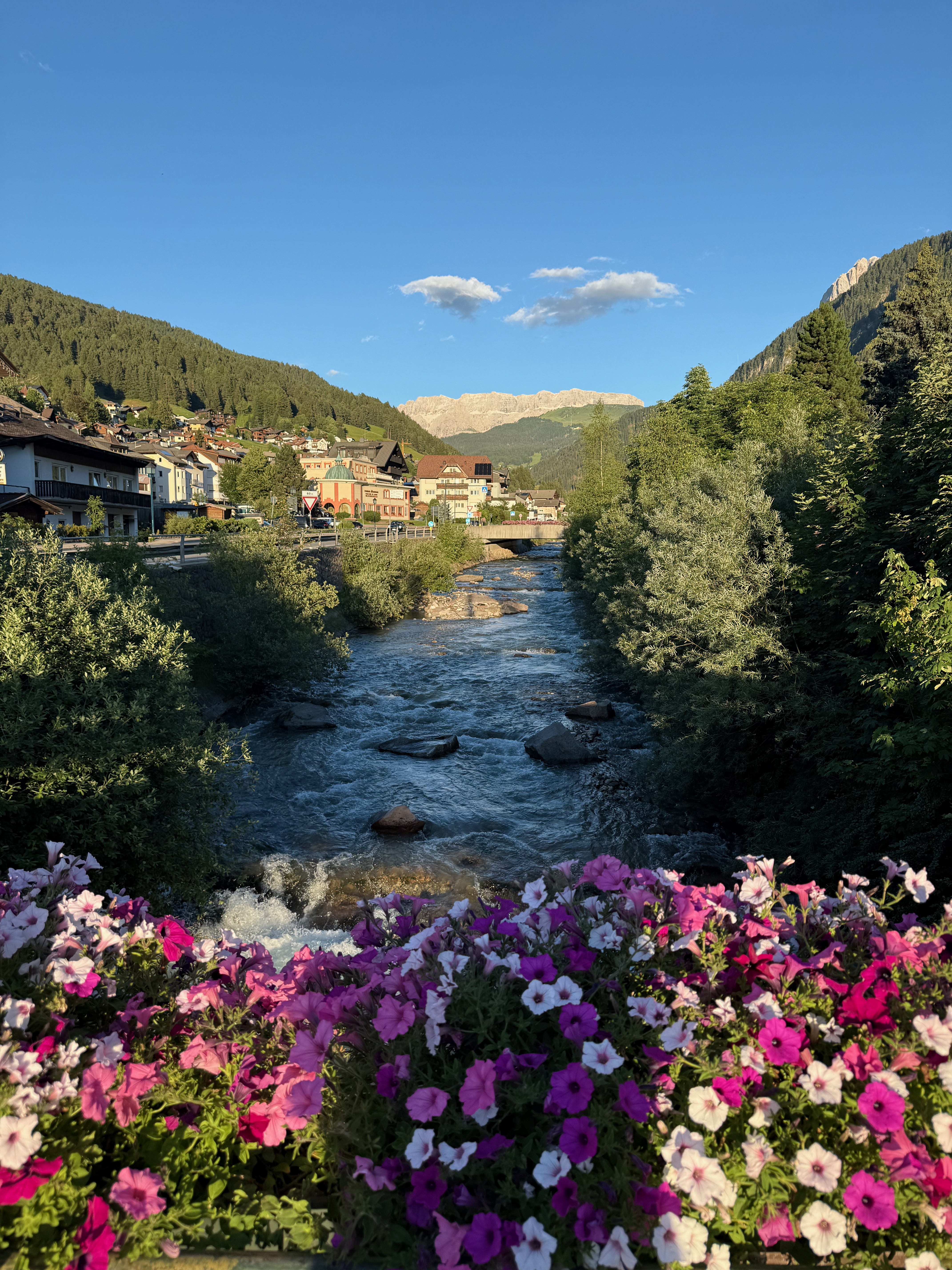
- The landscaping and gardening are immaculate throughout the town. People must take significant pride in their town!
- Cigarette use remains higher in Europe than in the US. But no smell of marijuana, a welcome change from Washington, D.C.
- Playgrounds are scattered throughout town. Every alpine hut also had a playground for children. The region as a whole appeared extremely child-friendly.
- Ski lifts throughout town, clearly a huge winter destination as well
Seceda Ridge
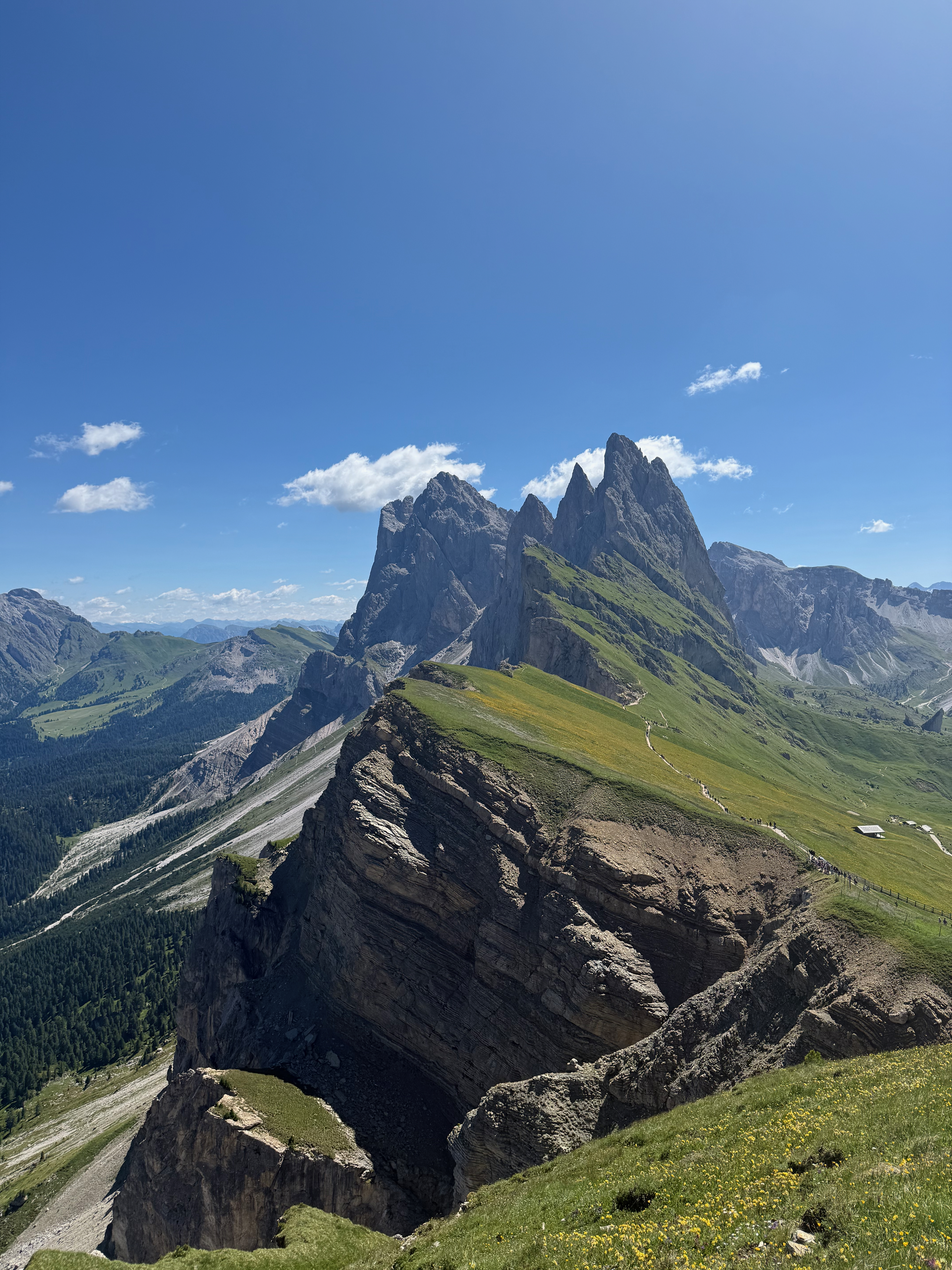
After enjoying a good night’s rest, we ate breakfast at our hotel and set off for the Seceda chairlift. Access to the chairlift was through a tunnel that took us through one of the mountains that line the valley in which Ortisei is nestled. Once we emerged on the other side, we saw the Seceda ridgeline and the cable car we were about to board. The cable car was unlike any I had taken before—the cabin fit several dozen people and moved rapidly towards the midpoint of the ridgeline climb, where we disembarked and boarded a second lift to take us the remainder of the way up.
The view from the top was absolutely incredible! It was also much cooler than it was in the valley; what a difference a few thousand feet makes!
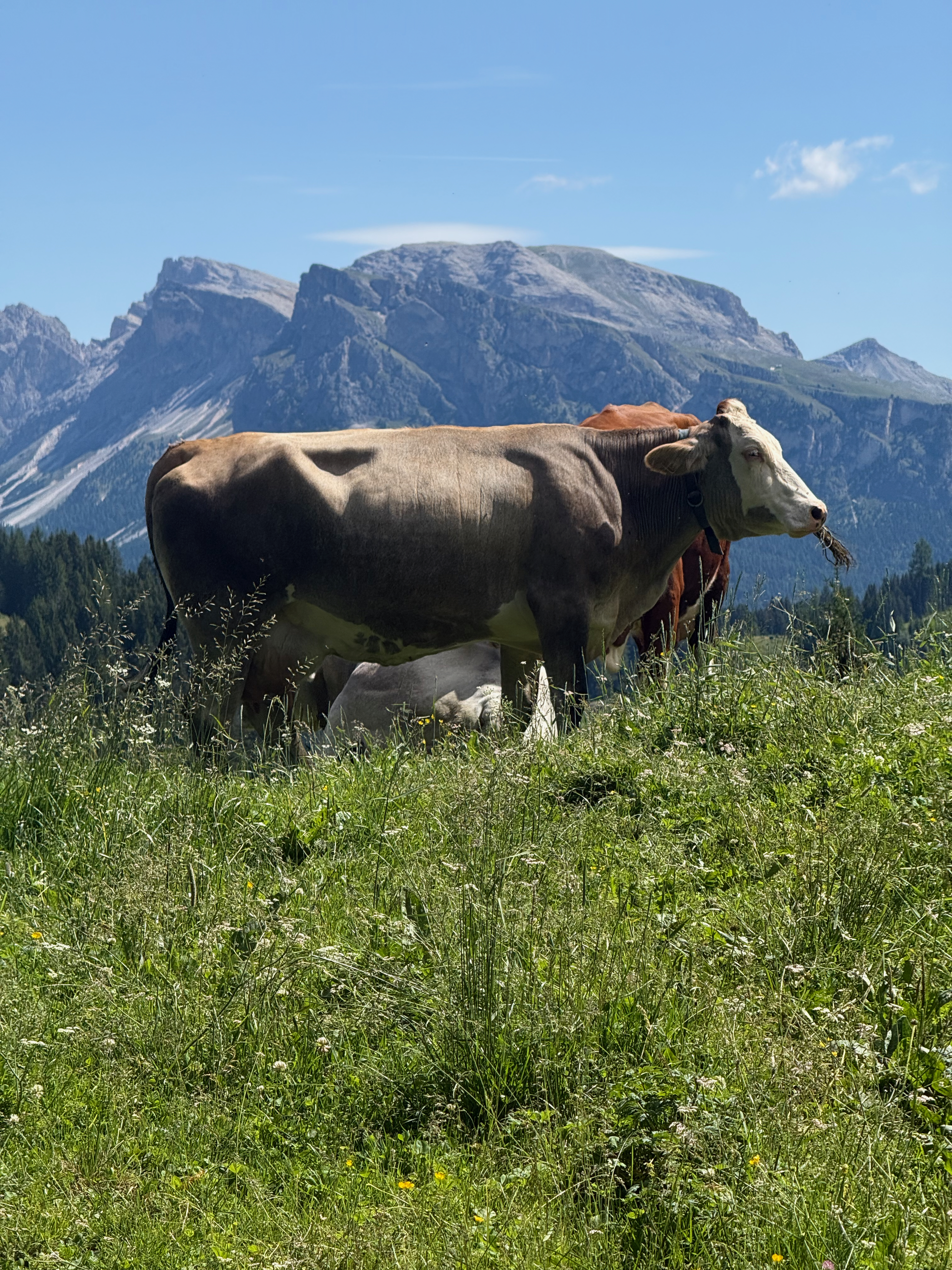
We stopped briefly for pictures at the top, then set off along the ridgeline and the sloping face towards pastures full of alpine cattle and the huts beyond. No amount of hiking appeared to ever take us more than half a mile or so from a hut; we were able to stop at one for coffee, another for a beer, and a third for lunch before starting back towards the cable car. The huts seemed to be strategically located at the best viewpoints throughout the ridgeline, and each offered excellent food and incredible views of the valley below.
Back in town, we found an excellent dinner followed by complimentary house-made limoncello, then spent some time in the town square for its patron saint celebration (Saint Ulrich). The town deftly blends both Italian and German influences—from Italian limoncello to a town celebration reminiscent of Oktoberfest (tents with beer and wursts). With our big hut-to-hut hiking days coming up, we made a steep climb up one of the small roads on the valley sides to get back to our hotel and packed our backpacks for the upcoming adventure.
Hiking to Sasso Piatto
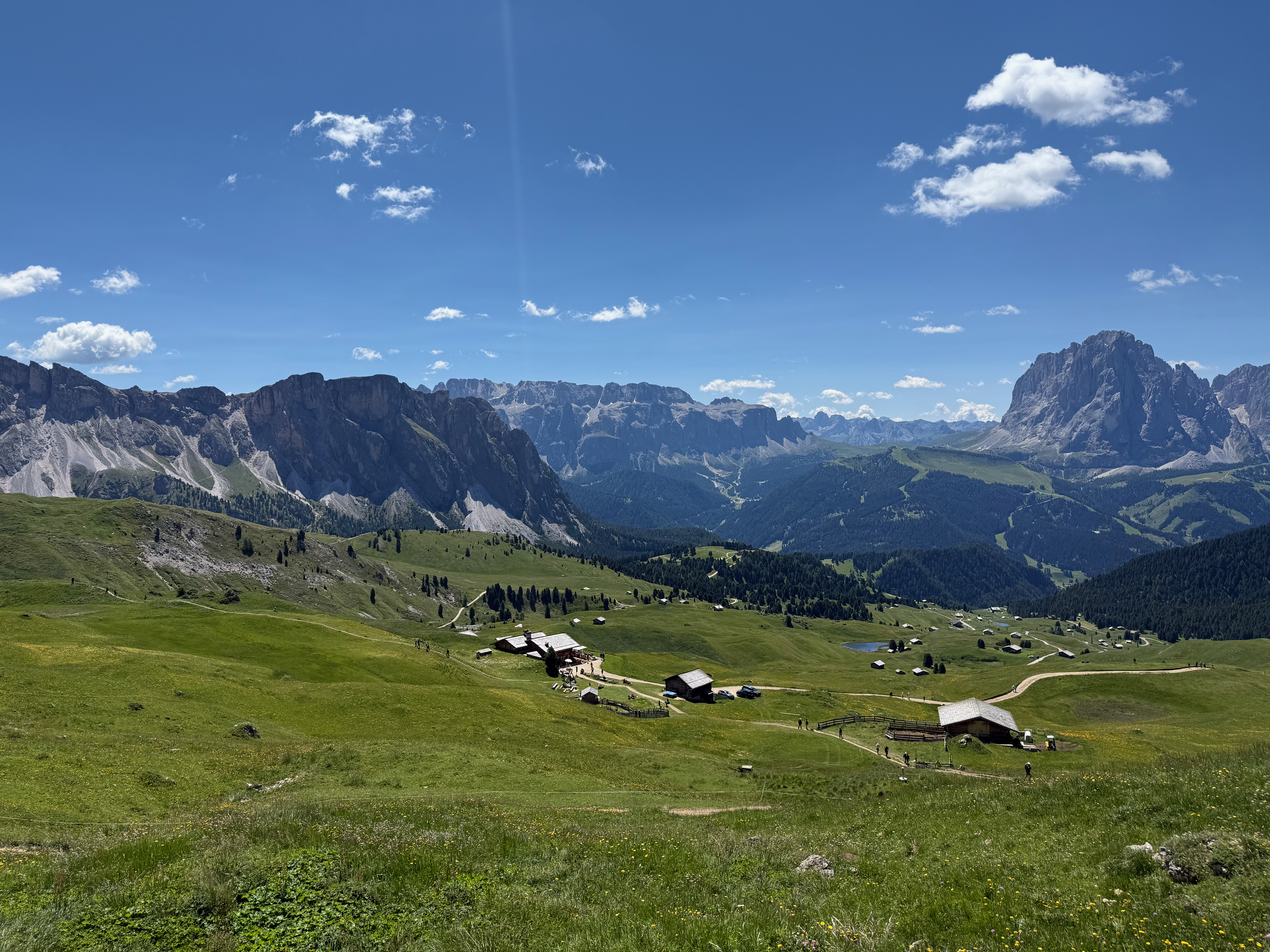
After another hotel breakfast, we walked in the opposite direction through town towards the Alpe di Siusi lift to start our hike towards Rifugio Sasso Piatto. Unexpectedly, a half-marathon trail race was taking place that same day, and we shared the trail with a few hundred trail runners for a mile or so before branching off towards the first of two huts. The runners were being given water in glass cups; I was unsure whether this was normal in Europe or a sustainability initiative specific to the Dolomites. The area was full of working farms, which unfortunately made for terrible allergies (I suspect from all the grass being cut for hay), although they slowly improved as we gained elevation over the course of the afternoon.
Similar to yesterday, we never found ourselves too far from a hut for a snack and a drink. We first stopped in Saltria for an Apfelstrudel and a beer, enjoying the views of the mountains and yet more cattle around us. Saltria also marked the beginning of a long uphill climb towards Sasso Piatto. We began up a ski slope, which ultimately transitioned into a gravel path and then a hiking trail as we continued higher up.
Huts expect hikers to arrive in the early to midafternoon because hiking later risks poor weather. We arrived in time for a late lunch, dropped off our packs, and took a few short hikes near the hut.
The hut experience in the Dolomites is drastically different from the US hut experience. At this hut, we enjoyed a three-course dinner, wine and beer, and hot water for the showers (limited to only three minutes though—it is a hut, after all!). The owner of the hut brought out his guitar after dinner and played a few traditional folk tunes for the crowd, who all joined in. But some things never change: much to the disappointment of the other fifteen people in the room, one person sharing our bunk room was an exceptionally loud snorer.
Sasso Piatto impressions:
- Marmots! Very cute alpine animals and many of them along the rocky slopes at higher elevations. Look quite playful.
- Terrible pollen allergies. Unsure if due to wildflowers or grass or something else, but even a double dose of Zyrtec was not enough.
- Fantastic food from the local farms (including one farm that was part of the hut we were staying at). Exceptionally fresh dairy.
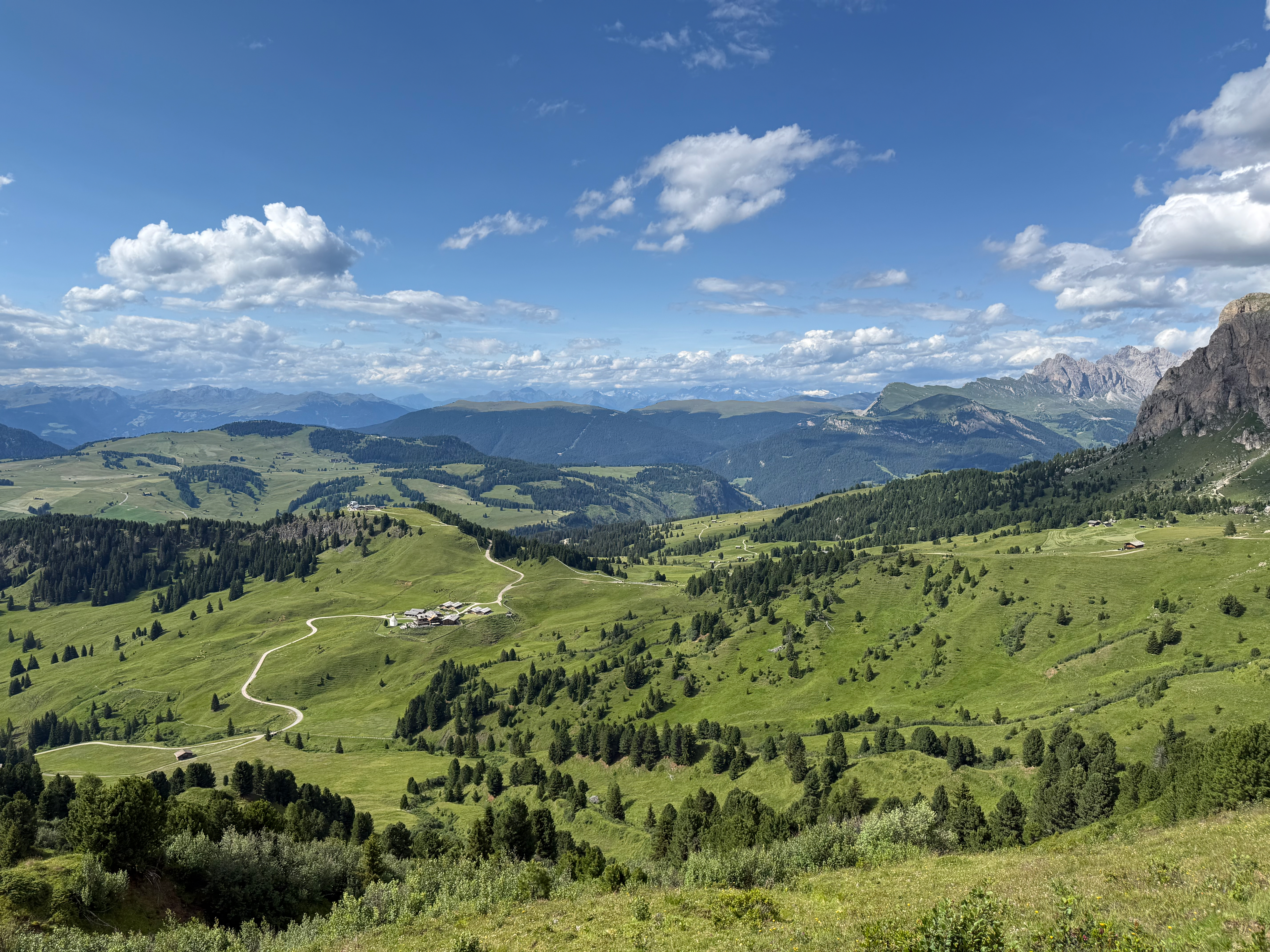
Hiking to Pisciadu
Mornings start early in huts. By 6 a.m., everyone was awake and rolling up their sleeping bag liners, putting on fresh socks, and getting ready for an early start. We helped ourselves to a light breakfast with yogurt from the local farm, then set off before 8 a.m. It turns out the marmots are also early risers, and we saw several as we traveled along the southern side of the Sassolungo towards the Sella Pass. We also passed by a true mountain hut—diesel generator, outdoor plumbing, and supplies delivered monthly by helicopter. Coming from a hut that had just served us a three-course meal, this was quite the shift! We proceeded onward and soon started encountering day-hikers who were departing from the road over the Sella Pass.
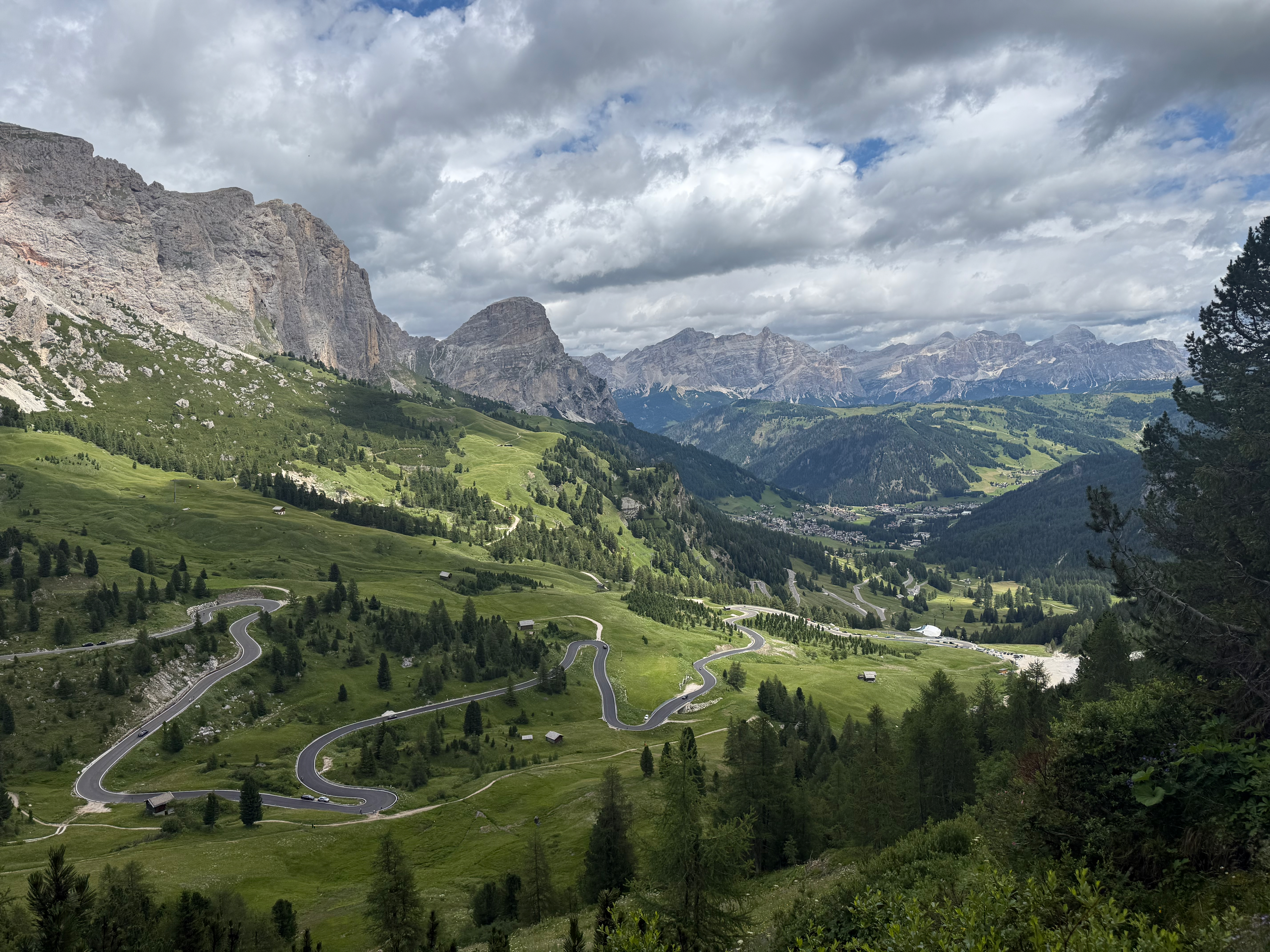
The pass itself was cold and windy, so we soon started down into the next valley to continue our journey to Pisciadu. We descended towards Plan de Gralba before continuing along the base of Piz Boe until we reached Passo Gardena, where we began our climb upwards.
While researching our itinerary, we came across varying accounts as to whether trail 666 (Val Setus) was a via ferrata or not. In our opinion, it absolutely is. As the trail got steeper, there were steel footholds and steel cables that hikers with carabiners could clip onto. Regrettably, we had neither carabiners nor helmets. Some of the confusion (besides differences in language) may lie in the fact that the climb is achievable without via ferrata equipment, unlike glacier climbing, which requires equipment such as ice axes and crampons. Even so, we would have felt much more confident with the proper safety equipment.
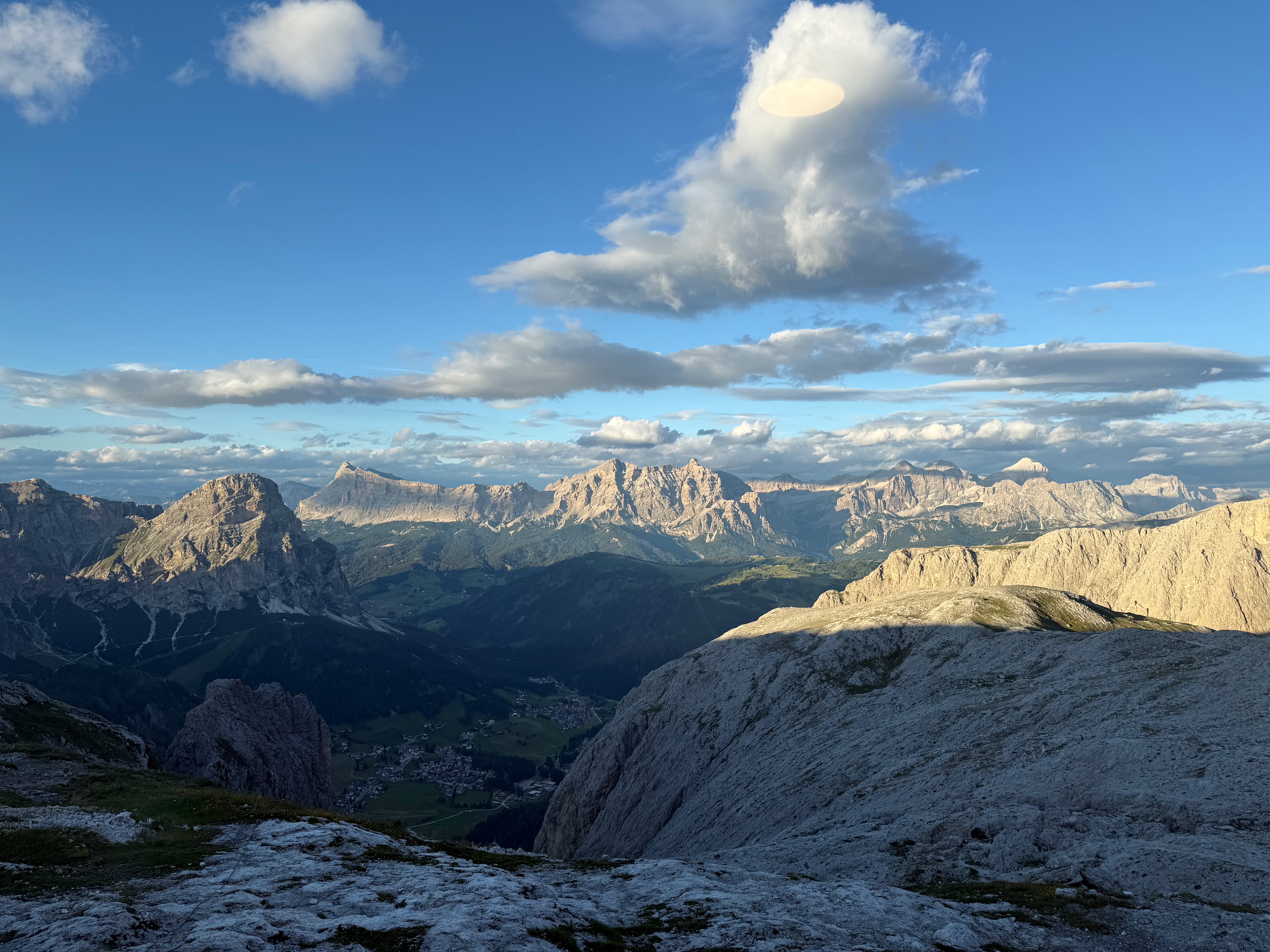
But after a few hundred feet nearly straight up, we arrived at the top and walked the final 500 feet to Rifugio Pisciadu. Here, we found a more rustic environment (supplies only delivered by helicopter) but thankfully with electricity, running water, and seemingly endless copies of the Uno card game. Despite supplies coming only by helicopter, the staff were quite generous with their pours and reasonable with their prices, and we helped ourselves to a drink before dinner. Dinner was simpler than at our previous hut, but equally delicious (and, similar to Sasso Piatto, with an excellent vegetarian option).
That evening, we were treated to the sight of the resupply helicopter landing and taking off, a double rainbow, and a World Cup game. The hut was like something out of a FIFA commercial; people from all over the world watched and cheered together around the hut’s only TV.
Mercifully, there was no snoring this time.
Descent and Bolzano
Now, we had to climb back down 666. The descent was easier than the ascent; I think it was easier to lower myself down the mountain than to launch myself upwards. Regardless, it was a relief to finish the via ferrata section and go back to normal hiking.
We returned to Passo Gardena, caught a bus, and found ourselves back in Ortisei after one transfer, able to pick up our bags from the hotel. Unbeknownst to us, this was to be the last time we could count on reliable bus service. Lake Garda was a dramatically different bus experience.
The ride out of Ortisei was as winding and perilous as it had been on the way in, although motion sickness was not as bad this time (perhaps not being jet lagged helped!). The trip was basically entirely downhill; for 35 minutes, we slowly followed the river through the valley until we arrived back in Bolzano. We were able to check in a little early to our hotel and enjoyed the luxury of a hot shower and air conditioning (despite temperatures in the 50s in the huts, the descent out of the mountains had brought with it a reminder that it was still a hot July).
We walked through Bolzano and helped ourselves to a gelato to cool off before grabbing dinner at Vogele, which advertises itself as an authentic South Tyrolean restaurant. The food prices throughout our time in the Dolomites were excellent, with a full meal including drinks for less than $100. Our hotel stay included a local travel pass that provided access to the local cable car. This was a first for both of us—public transportation to a mountaintop! We rode over the valley as the sun set, made a quick loop around Soprabolzano, and returned by cable car. The ride was more harrowing than a subway ride, as part of it involved being several hundred feet above the valley floor going from peak to peak!